
CGC Pristine 10 vs PSA 10: Which Grade Holds More Value?
Compare CGC Pristine 10 and PSA 10 grades for trading cards. Understand market value, grading standards, and submission processes for European collectors.

CGC Pristine 10 vs PSA 10: Understanding the Value Proposition
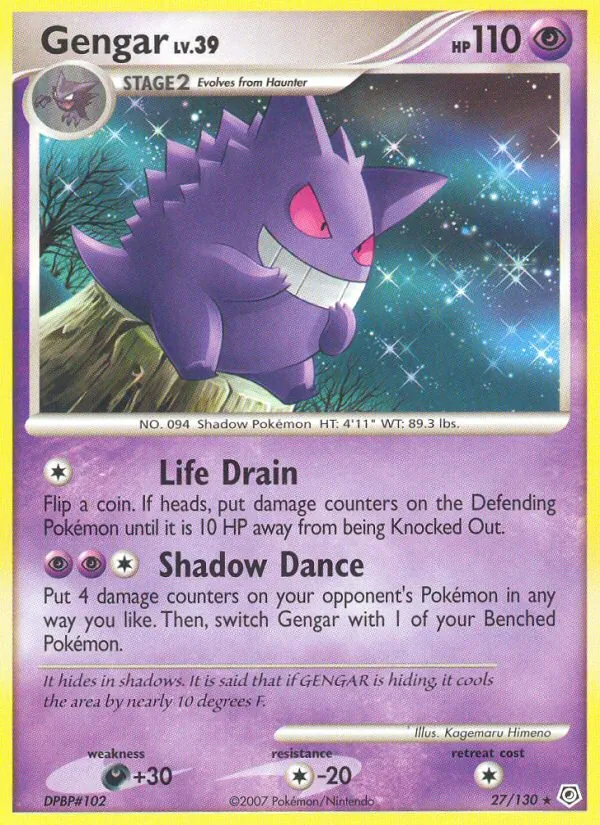
When collecting or investing in trading cards, achieving a top grade is often the ultimate goal. For many years, PSA's Gem Mint 10 has been the benchmark for high-value cards. However, with the rise of Certified Guaranty Company (CGC) and its stringent grading scale, the CGC Pristine 10 has emerged as a significant contender. This guide explores the nuances between these two top-tier grades, helping European collectors understand their market value, grading standards, and implications for their collections.
The Grading Scales: A Quick Overview
To appreciate the difference between a CGC Pristine 10 and a PSA 10, it is crucial to understand each company's grading structure.
PSA's Gem Mint 10
PSA (Professional Sports Authenticator) awards a Gem Mint 10 when a card is virtually perfect. This means it exhibits four sharp corners, sharp focus, full original gloss, and good centering. Minor imperfections, barely visible to the naked eye, might sometimes pass as a PSA 10, particularly if they do not detract from the card's overall visual appeal.
CGC's Pristine 10
CGC, particularly after its rebranding from CSG, employs a more granular scale for its highest grades. A CGC Pristine 10 requires a card to be virtually flawless, exhibiting perfect 10 sub-grades in Centering, Surface, Corners, and Edges. This means there is no allowance for even minor imperfections that might pass PSA's Gem Mint 10 standard. Below the Pristine 10, CGC also offers a Gem Mint 10 (with at least one sub-grade of 9.5 but no sub-grade below 9.5) and a Perfect 10 (all sub-grades are 10, visually perfect).
Market Perception and Value
The perception of value for a graded card is largely driven by market demand and historical precedent. PSA has been the dominant force in the hobby for decades, establishing its Gem Mint 10 as the gold standard.
PSA 10 Market Value
Historically, a PSA 10 often commands the highest prices in the secondary market. Its ubiquity and long-standing reputation mean that buyers generally trust the grade, leading to strong liquidity and consistent pricing. For many key cards, a PSA 10 can fetch hundreds, thousands, or even hundreds of thousands of Euros. The vast majority of collectors and investors still view PSA 10 as the pinnacle for maximising resale value, especially for vintage and highly sought-after modern cards.
CGC Pristine 10 Market Value
The CGC Pristine 10 is a relatively newer entrant to the top-tier grading discussion. Because it represents a condition that is objectively superior to a standard Gem Mint 10 from PSA, it should theoretically command a premium. In practice, however, its market value can be more nuanced.
- Rarity and Scarcity: CGC Pristine 10s are significantly rarer than PSA 10s. This scarcity can drive up prices, particularly for highly desirable cards where collectors seek the absolute best condition.
- Emerging Premium: For certain modern cards, especially Pokémon and sports cards, CGC Pristine 10s are beginning to sell for values comparable to, or even exceeding, PSA 10s. This trend is more pronounced in newer markets where collectors are more attuned to the tighter grading standards.
- Liquidity: While growing, the market for CGC Pristine 10s is generally less liquid than for PSA 10s. This means it might take longer to sell a CGC Pristine 10, and the pool of potential buyers may be smaller, depending on the card.
Comparing Actual Sales Data (Illustrative Examples)
It is difficult to provide exact real-time prices due to market fluctuations, but recent trends illustrate the comparison:
- Modern Pokémon: For a popular modern Pokémon card, a PSA 10 might sell for EUR 500. A CGC Pristine 10 of the same card could potentially reach EUR 600-800, reflecting its perceived superior condition and rarity. A CGC Perfect 10 would likely surpass this further.
- Vintage Sports Cards: For a classic vintage sports card, a PSA 10 might fetch EUR 10,000. A CGC Pristine 10 for such a card is exceedingly rare. If one appears, its price could be highly variable, potentially matching or slightly exceeding the PSA 10, but the market might still lean towards PSA due to historical preference and established collector base.
Ultimately, for most cards, a PSA 10 remains the safer bet for maximum resale value and liquidity due to its established market presence. However, for the discerning collector chasing absolute perfection, especially with modern cards, a CGC Pristine 10 is undeniably a higher-tier grade that is gaining traction and value.
Which Grade Should You Target?
The choice between aiming for a CGC Pristine 10 or a PSA 10 depends on your goals:
- For Maximum Resale Value and Liquidity: If your primary goal is to maximise the monetary return and ensure quick sales, PSA 10 generally remains the stronger choice, especially for highly liquid cards across all eras.
- For Absolute Condition and Rarity: If you are a collector who values the highest possible grade and wants to own a truly flawless card, the CGC Pristine 10 (or Perfect 10) is the ultimate achievement. While its market might be smaller, it is growing, and these cards are undeniably rare and impressive.
- For Modern Cards: For newer sets, CGC is establishing a strong presence, and their strict grading can lead to significant premiums for Pristine 10s.
Submitting Your Cards for Grading: How Slabbed.eu Helps
Regardless of which grading company you prefer, getting your cards safely graded from anywhere in Europe can be a complex process. Slabbed.eu acts as a trusted intermediary, simplifying this for collectors across the continent.
We handle the entire submission process for PSA, BGS, CGC, and TAG. This includes:
- Secure Shipping: From your location in Europe to our facility, and then insured shipping to the grading company in the US or UK, and back again to you.
- Batch Submissions: By consolidating submissions from multiple European collectors, we can often secure better pricing and faster turnaround times.
- Expert Handling: Our team ensures your cards are properly packaged and handled throughout the journey, minimising risks.
- Insurance: All shipments are fully insured, providing peace of mind for your valuable cards.
Whether you are aiming for that elusive CGC Pristine 10 or the market-proven PSA 10, Slabbed.eu provides a seamless, secure, and reliable service to get your cards professionally graded.
Frequently Asked Questions
Q1: Is a CGC Pristine 10 harder to get than a PSA 10?
Yes, a CGC Pristine 10 is generally considered significantly harder to achieve than a PSA 10. CGC's requirement for perfect 10 sub-grades across all categories (Centering, Surface, Corners, Edges) makes it a much stricter standard.
Q2: Do all cards have a CGC Pristine 10 equivalent to a PSA 10?
No. A card graded CGC Pristine 10 is almost certainly a PSA 10 equivalent or better, but a PSA 10 would not necessarily achieve a CGC Pristine 10. It might receive a CGC Gem Mint 10, or potentially even lower, if it has minor flaws that PSA overlooks but CGC does not.
Q3: How much more expensive is a CGC Pristine 10 typically than a PSA 10?
The price difference varies greatly by card, rarity, and market demand. For highly sought-after modern cards, a CGC Pristine 10 can command a 20-50% premium, or even more, over a PSA 10. For vintage cards, while exceedingly rare, the premium might be similar or depend more on specific buyer preference due to PSA's established dominance in that segment.
Q4: Can Slabbed.eu help me submit cards to both PSA and CGC?
Absolutely. Slabbed.eu is a grading intermediary for both PSA and CGC, along with BGS and TAG. We can guide you through the submission process for either company, ensuring your cards are handled professionally and securely from Europe to the grading service and back.
Kom i gang med Slabbed.eu
Danmarks dedikerede shop for Pokémon TCG og grading mellemmand-service til PSA, BGS, CGC og TAG.